Your content already has an offer in it if you recognize even three of these five signs: a repeated question in your DMs, people asking about consulting, posts people save more than they like, audience comments that reuse the same specific phrases, and free content you privately think should have been paid.
Most creators think they don't have an offer yet.
They're waiting for the right idea. The right moment. The right number of followers. And while they're waiting, their audience is literally telling them what to build — through every DM, every reply, every "how do I do what you do?" — and getting nothing back except more free content.
You don't have a discovery problem. You have a signal-reading problem.
Here are five signs the offer already exists in what you've published. If you recognize even three of these, you're not at the beginning of the process — you're at the end of the discovery phase.
Sign 1: You answer the same question in your DMs every week
Not variations of a question. The same question, word for word, from different people.
That's not a coincidence. That's your audience telling you there's a gap between what they know and what they need to know — and that gap has a price on it.
I wrote about this in The Repeated Question Is the Offer. The short version: if you've answered something more than five times in your DMs, you've already written the outline for a paid resource. The only thing missing is the wrapper.
The question that keeps showing up in my inbox after months of writing about AI workflows: "How do I actually set this up for my specific situation, not just re-prompting every time?" That's not a curiosity question. That's someone ready to pay for implementation help.
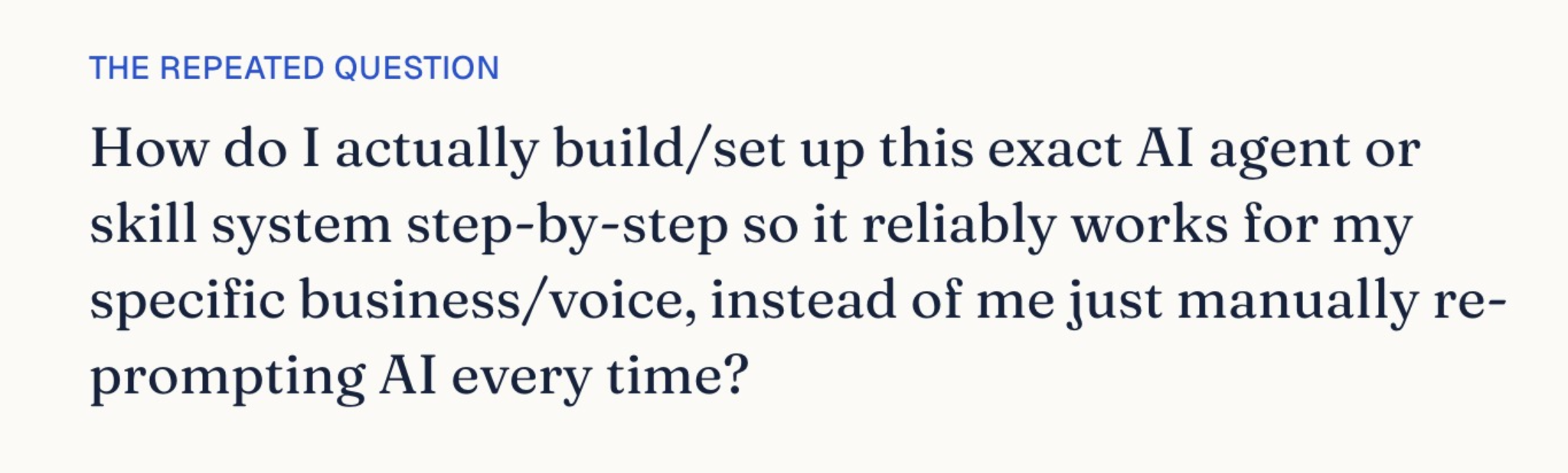
Sign 2: People ask if you take clients, do consulting, or offer 1-on-1
This is the clearest signal of all and most creators dismiss it.
"Do you do consulting?" is not small talk. It's someone who has read enough of your content to believe you can solve their problem — and who is asking if there's a way to pay you to do it.
If you've received this question even twice in the last three months and you don't have a paid offer, you are turning away revenue that has already found you. That's not a pipeline problem. That's a packaging problem.
The offer doesn't need to be consulting. It can be a course, a template, a system, a done-with-you sprint. But it needs to exist.
Sign 3: You get saves and bookmarks, not just likes
Likes are ego. Saves are intent.
When someone saves a post, they're telling you: I want to come back to this. That's the behavior of someone who thinks they might need this later — which means they already know they have the problem.
Track which posts get bookmarked. Look for patterns. The posts that consistently get saved are the ones your audience is treating as reference material — which means there's demand for a more complete, structured version of that information.
A post about a process that people save isn't just content. It's a proof of concept.
Sign 4: Your audience has specific vocabulary for their problem
When people describe their pain in your comments and DMs, do they use the same words and phrases — even when they're different people who don't know each other?
That's not coincidence either. It means the problem is real and shared, and your content is attracting people who have it.
This is one of the most underrated signals in content creation. When you start to notice "I feel like I'm just starting from scratch every week" showing up in five different comment threads from five different people, that's not a writing sample. That's your offer copy, already written by your audience.
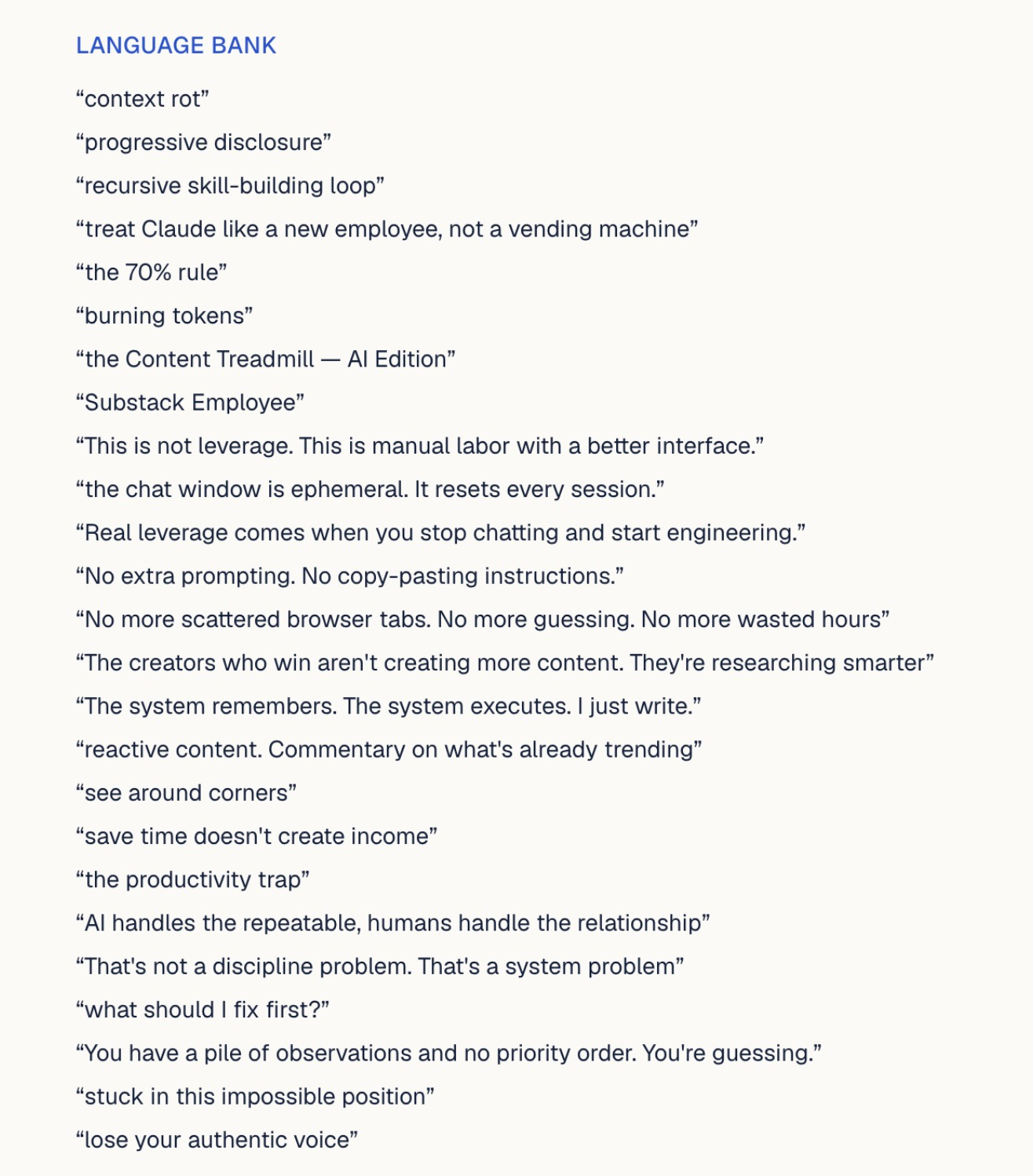
If you run your content through AI Offer Crafter, it builds a language bank from your published posts — verbatim phrases your audience has used to describe what they want. The offer copy it generates is ~70% their vocabulary, not generic marketing language. That specificity is why it converts better than anything you'd write from scratch.
Sign 5: You're already solving the problem for free — and you resent it slightly
This is the one nobody wants to admit.
There's a piece of content you've created — probably a thread, an email, a YouTube video — that you know is worth more than you're charging for it. You put real work into it. Real thinking. And you gave it away.
And every time someone says "this should be a course," a small part of you agrees.
That low-grade resentment is information. It's not entitlement — it's your creative instincts recognizing that you've crossed from "sharing" into "subsidizing."
If you've made something that took you real time to produce, that people treat as a reference, that generates DMs asking for more — you've already proven the offer. You just haven't put a buy button on it.
Frequently asked questions
How do I know if my content already has an offer in it?
Check for five signals: a question you answer the same way repeatedly in DMs, people asking if you take clients or do consulting, posts that get saved more than liked, audience comments that use the same specific language to describe their problem, and content you gave away for free that you privately think should have been paid.
What's the difference between likes and saves as a buying signal?
Likes are passive approval. Saves mean someone plans to come back to the post later because they think they'll need it — that's a much stronger signal of real, ongoing demand for a solution.
Do I need a large following to have a sellable offer?
No. These five signs show up regardless of audience size — they're about how deeply a smaller number of people resonate with a specific problem, not how many people saw the post.
What to do with these signals
The trap is collecting signals without acting on them.
Most creators spend months in passive awareness mode — noticing the repeated question, feeling the slight resentment, watching the saves pile up — without ever consolidating those signals into a clear direction.
The reason is usually one of two things: they're not sure which signal to follow, or they're not sure if the offer they're imagining is actually worth buying.
Both of those are solvable. The first one — which direction to go — is about scoring your candidate offers against each other: who the buyer is, what it costs them not to solve the problem, whether there's enough urgency to get them off the fence. The second one — whether it's worth buying — is about running the offer through an adversarial challenge before you build it, not after.
I walk through that process step by step in How to Find Your Repeated Question in 30 Minutes. And if you're still unsure what to sell, What Should You Actually Sell? (It's Not a New Idea) covers the three places an offer is usually hiding. But if you've recognized three or more of these signs in your own content, you're not at the start of the journey. You're already holding the answer.
The question is whether you're going to package it.